

Most teams do not have a collection problem. They have a filtering problem. The best threat intelligence sources are not the ones that publish the most indicators or produce the loudest reports. They are the ones that consistently reduce uncertainty for detection engineers, incident responders, threat hunters, and CTI analysts working against real operational constraints.
That distinction matters because source quality changes the outcome of investigations. A flashy feed with weak context can waste analyst hours, inflate SIEM costs, and drive bad blocking decisions. A slower, better-curated source can do more for a SOC than a dozen noisy dashboards. If you are building or refining a collection plan, it helps to think in terms of source categories, analytical strengths, and fit for mission rather than chasing a generic "top sources" list.
What makes the best threat intelligence sources useful
For experienced defenders, usefulness comes down to four traits. First, timeliness has to match the use case. Vulnerability exploitation reporting loses value if it arrives after exploitation has already moved into broad scanning and mass compromise. Second, context matters more than volume. Knowing an IP was seen in malicious activity is less valuable than knowing which intrusion set used it, in what campaign, against which sectors, and with what level of confidence.
Track Threat Intelligence like this every Monday.
Every Monday, the 5 threats SOC teams can't afford to miss — with analyst commentary.
Third, the source needs to support operational decisions. A good source should help answer whether a rule should be tuned, a host should be isolated, a domain should be blocked, or a vulnerability should be prioritized. Fourth, it should be possible to validate and enrich the data. Intelligence that cannot be cross-checked against telemetry, malware analysis, passive DNS, or victimology often degrades into reporting trivia.
The trade-off is that no source scores highest on every dimension. Government advisories may be high-confidence but slower and less granular. Commercial telemetry may be broad and fast but opaque about collection methodology. Research blogs may provide exceptional technical depth while covering only a narrow slice of the threat landscape.
The 12 best threat intelligence sources by use case
1. Vendor incident and research blogs
Security vendor research teams remain one of the best starting points for current intrusion tradecraft, malware evolution, and actor tracking. Mature vendors have large telemetry estates, incident response visibility, sinkholes, and reverse engineering depth. Their reporting often includes TTP mapping, infrastructure details, detection logic, and campaign timelines.
The limitation is bias and selective visibility. Vendor reporting reflects where that vendor has coverage. Naming conventions also vary, which means actor overlap and duplicate tracking remain common. Analysts should treat vendor blogs as strong inputs, not canonical truth.
2. Government and national CERT advisories
CISA, NSA, FBI, NCSC, and peer CERT organizations provide some of the most actionable public intelligence when the goal is defense prioritization. Joint advisories often include observed TTPs, mitigation guidance, exploited vulnerabilities, and infrastructure associated with active campaigns. For regulated environments and leadership reporting, these advisories carry institutional weight that can accelerate action.
Their weakness is cadence and granularity. You may get high-confidence guidance but fewer low-level artifacts and less campaign nuance than in private-sector reporting. Still, for vulnerability prioritization and strategic risk framing, these sources are hard to ignore.
3. ISAC and ISAO communities
Sector-based intelligence sharing remains valuable because adversary targeting is not evenly distributed. Financial services, healthcare, energy, education, and manufacturing all face different blends of crimeware, extortion, espionage, and supply chain risk. ISAC content can surface sector-relevant patterns before they become broadly visible in public reporting.
The main variable is quality of participation. A highly engaged community with good moderation can provide excellent early warning. A weak one can become a stream of duplicated alerts with little analytical lift.
4. Malware analysis and reverse engineering publications
When a campaign hinges on a loader, wiper, infostealer, or custom RAT, detailed malware analysis is often the fastest path to durable detection. Good reverse engineering writeups expose protocol behavior, persistence mechanisms, encryption routines, anti-analysis features, and fallback infrastructure patterns that basic IOC feeds miss.
These sources are especially useful for detection engineering and hunt development. The caveat is scope. Malware-centric reporting may underplay access vectors, operator objectives, or victimology if the analysis is focused primarily on samples.
5. Vulnerability intelligence sources
Not every CVE deserves immediate action, and not every critical CVSS score translates into active risk. The best vulnerability intelligence sources close that gap by tying vulnerabilities to exploitation status, attacker adoption, exploit availability, and observed intrusion activity. This is where KEV-style prioritization, exploit telemetry, and field reports become far more useful than raw NVD enumeration.
For defenders managing patch backlogs, this category is essential. The challenge is distinguishing speculative risk from confirmed exploitation. Sources that clearly label confidence and evidence are materially more useful than headline-driven vulnerability chatter.
6. Open source intelligence from attacker infrastructure tracking
Passive DNS analysis, certificate transparency monitoring, WHOIS history, URL scanning platforms, and ASN-level clustering can reveal campaign expansion before finished reporting appears elsewhere. For teams with mature CTI capability, infrastructure-focused OSINT is one of the highest-leverage collection areas because it supports proactive detection and scoping.
This category demands analyst discipline. Infrastructure overlap does not always equal actor attribution, and false clustering is a constant risk. Still, used carefully, it can expose relationships between phishing kits, C2 nodes, redirectors, and staging servers faster than narrative reporting.
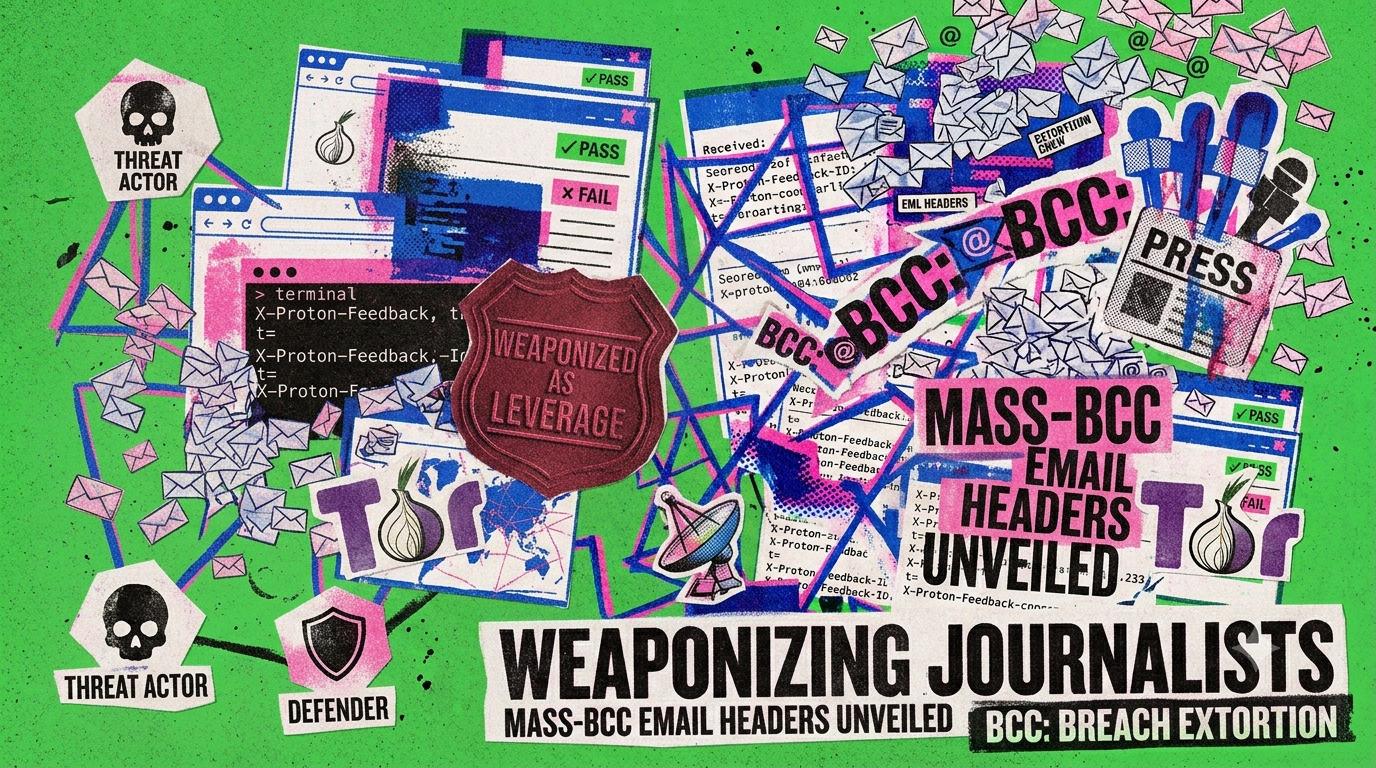
7. Ransomware leak sites and extortion monitoring
Extortion ecosystems continue to provide direct signals about targeting patterns, affiliate behavior, and pressure operations. Leak site monitoring can help identify sector targeting shifts, repeat victimization trends, and timing between initial intrusion, encryption, and public naming. Combined with a victims database or ransomware map, this source becomes useful for both situational awareness and executive risk communication.
It also has obvious drawbacks. Leak site claims are not always complete or accurate, and public posting generally reflects the later stage of an intrusion lifecycle. It is useful context, not early warning by itself.
8. Closed-source commercial intelligence platforms
Commercial CTI providers can add real value when they combine broad collection with analyst curation, actor tracking, malware context, and usable API access. For teams that need normalized reporting across multiple regions, sectors, and intrusion sets, commercial platforms can reduce collection overhead and improve workflow efficiency.
Whether they are worth the cost depends on your maturity. If your team lacks the ability to validate and operationalize what the platform provides, expensive intelligence can become shelfware. The platform should fit your detections, case management, and enrichment workflows, not sit beside them.
9. Information from IR retainers and MDR partners
One of the most underused sources is your own service ecosystem. Incident response partners, managed detection providers, and DFIR teams often see intrusion patterns early across multiple clients. Their visibility into initial access, dwell time, tool transfer, and hands-on-keyboard behavior can be more operationally relevant than polished public reports.
This intelligence tends to be highly actionable because it reflects real compromises in environments similar to yours. The limitation is access control and disclosure scope. Much of the best information remains private or lightly sanitized.
10. Social channels used by credible researchers
Security researchers often publish technical leads, YARA updates, exploitation observations, and malware notes on social platforms well before long-form reports are available. For fast-moving events, that speed matters. It can shorten time to triage during active exploitation waves or emerging campaigns.
This is also where noise becomes dangerous. Social reporting is unevenly validated and heavily affected by reputation dynamics. Use it as a lead-generation layer, not a final intelligence product.
11. Adversary reporting from law enforcement actions and indictments
Takedowns, seizures, indictments, and sanctions can provide unusual insight into criminal infrastructure, affiliate relationships, laundering channels, and operational mistakes. These documents sometimes reveal actor details that private research could only infer.
They are not frequent, and they rarely satisfy tactical collection needs on their own. But they can materially improve long-term actor understanding and confidence in attribution judgments.
12. Internal telemetry and case history
The most valuable source is often the least glamorous. Your own EDR, proxy, DNS, email, identity, and cloud telemetry should anchor every intelligence workflow. Internal detections, past incidents, recurring false positives, and sector-specific attack paths tell you what matters in your environment, which is more useful than broad external reporting.
External intelligence without internal validation is just borrowed context. The teams that get the most from threat intelligence are the ones that continuously map outside reporting back to local detections, controls, and exposure.
How to evaluate the best threat intelligence sources for your team
A mature program does not ask which source is best in the abstract. It asks which source improves which decision. If the goal is vulnerability prioritization, exploitation evidence and asset relevance matter most. If the goal is threat hunting, malware behavior, infrastructure pivots, and detection content matter more. If the goal is executive reporting, source credibility and trend stability may outweigh speed.
It also helps to measure source performance directly. Track how often a source contributes to true-positive investigations, meaningful detection changes, faster scoping, or improved patch prioritization. If a source generates constant enrichment activity but almost never changes action, it may be informationally interesting and operationally weak.
Freshness should be judged by threat type. Phishing infrastructure can decay within hours. Actor capability analysis can remain useful for months. Good source selection means matching collection cadence to adversary tempo rather than treating all intelligence as equally time-sensitive.
Building a collection stack that does not collapse under noise
The strongest approach is layered. Start with internal telemetry and a small set of high-confidence public and vendor sources. Add sector sharing if your industry is actively targeted. Bring in vulnerability intelligence that distinguishes active exploitation from theoretical severity. Only then add broader commercial or OSINT collection if your team can absorb it.
Normalization matters just as much as collection. Standardize actor aliases, tag sources by confidence and use case, and separate tactical indicators from analytical judgments. If every source enters the pipeline as undifferentiated "intel," your analysts will spend their time reconciling naming conflicts and redundant artifacts instead of improving detections.
This is also where a utility-driven research platform can help. A site that combines current reporting with reference material, malware analysis, and structured tracking assets gives teams multiple ways to validate what they are seeing without fragmenting the workflow.
The best source is rarely the most popular one. It is the source that helps your team decide faster, detect earlier, and waste less effort on noise the next time an intrusion lands in the queue.
Source: https://cyberthreatintelligence.net/best-threat-intelligence-sources