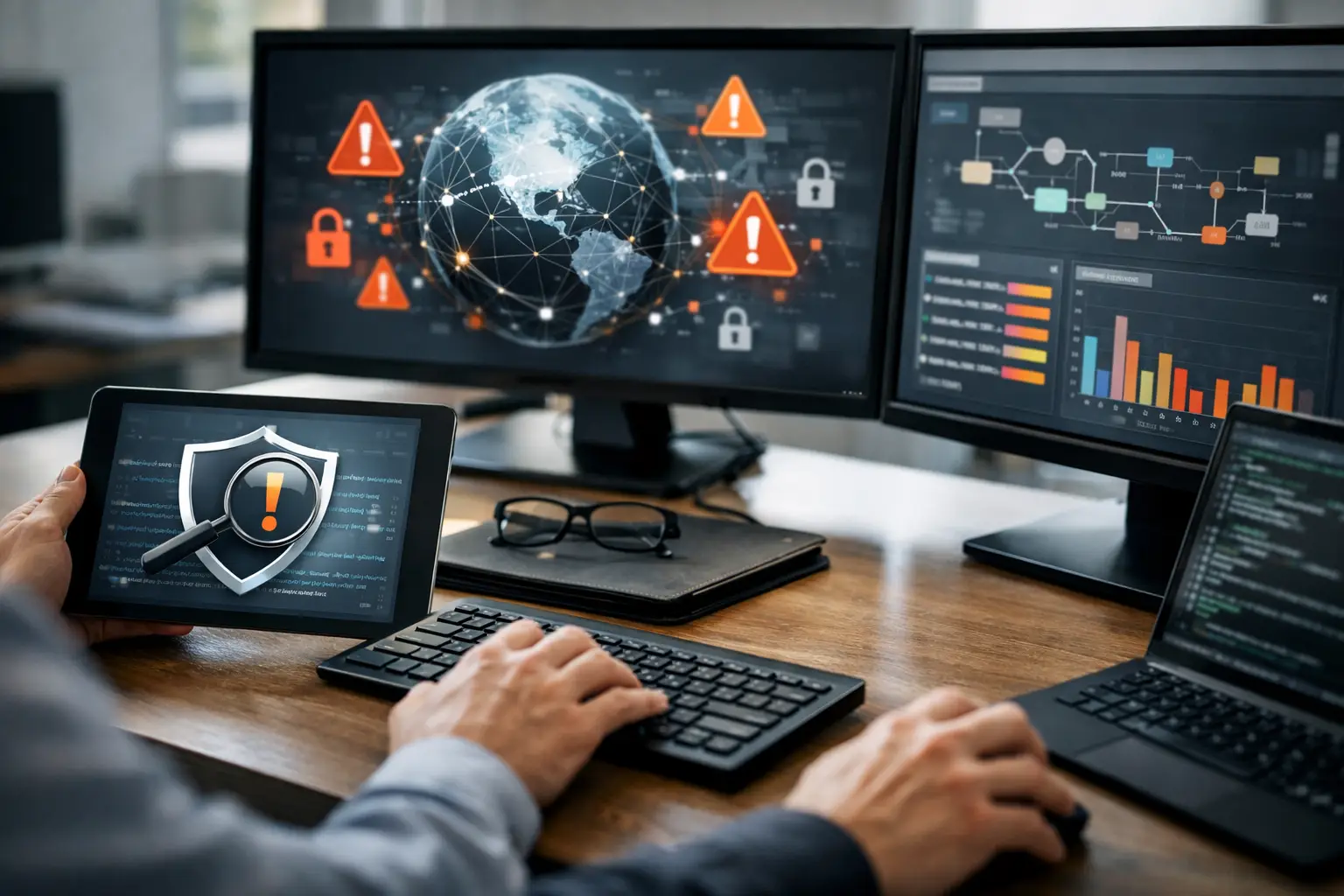



A phishing lure tied to a known intrusion set lands in a finance mailbox at 8:12 a.m. By 8:20, the same infrastructure appears in fresh telemetry from another sector. The difference between a noisy alert and a meaningful response is often cyber threat intelligence monitoring - the ongoing work of watching threat activity, validating relevance, and translating external signals into internal action.
For security teams, that sounds simple until volume, duplication, and stale indicators start getting in the way. Monitoring is not just collecting feeds or reading vendor reports. It is the discipline of deciding what matters to your environment, how fast it matters, and what to do before adversaries turn weak signals into an incident.
What cyber threat intelligence monitoring actually means
Cyber threat intelligence monitoring is the continuous observation of threat data sources, adversary behavior, vulnerability activity, malware trends, and operational reporting to support defense decisions. The goal is not visibility for its own sake. The goal is timely, usable context.
Track Threat Intelligence like this every Monday.
Every Monday, the 5 threats SOC teams can't afford to miss — with analyst commentary.
That context can come from many places: internal telemetry, OSINT, closed reporting, dark web observations, malware analysis, phishing trends, exploited vulnerability tracking, and industry-specific incident reporting. Monitoring ties those sources together and asks practical questions. Is this relevant to our sector? Does this align with attacker behavior we already see? Should detection, blocking, hunting, or patching change because of it?
This is where many programs succeed or fail. Teams often invest in intelligence collection but underinvest in monitoring workflows. If nobody is triaging, validating, enriching, and routing intelligence, the result is a growing pile of unread data.
Why cyber threat intelligence monitoring matters in operations
The clearest value of monitoring is prioritization. Most organizations do not have a shortage of indicators, advisories, or vulnerability notifications. They have a shortage of analyst time. Good monitoring reduces that burden by turning broad threat activity into environment-specific decisions.
For a SOC, that might mean suppressing low-value noise and pushing high-confidence infrastructure into detections. For an incident response team, it might mean recognizing that a malware family now favors a different persistence mechanism. For vulnerability management, it might mean separating widely discussed CVEs from those seeing active exploitation and clear fit within the organization's attack surface.
It also sharpens situational awareness. Attackers reuse infrastructure, shift malware loaders, test new social engineering themes, and move between sectors. Monitoring helps defenders see those changes early enough to adjust playbooks instead of reacting after compromise.
That said, the value depends on maturity. A small team without a defined intake process may get more benefit from a tightly scoped monitoring model than from a broad intelligence platform rollout. More data is not always better. Better filtering usually is.
The core components of an effective monitoring program
A workable monitoring program starts with priority intelligence requirements. If your team cannot state what it needs to know, every source looks equally urgent. Requirements should be tied to business risk and operational decisions, such as ransomware targeting healthcare suppliers, credential phishing against cloud admins, or exploitation of internet-facing edge devices.
Collection comes next, but selective collection matters more than feed count. Internal alerts, incident artifacts, public reporting, vendor intelligence, social channels used by researchers, underground observations, and sector reporting can all contribute. The right mix depends on the organization. A cloud-heavy SaaS provider should monitor different threat patterns than a manufacturer with legacy OT dependencies.
Processing and enrichment are where raw information becomes useful. Indicators need normalization. Vulnerabilities need exploit context. Adversary reporting needs mapping to known tactics and techniques. Infrastructure needs age, reputation, hosting, and overlap analysis. Without enrichment, monitoring becomes little more than alert forwarding.
Dissemination is the operational test. Intelligence should arrive in the right place and in the right format. Detection engineering may need a concise list of new behaviors or IOCs. Leadership may need a brief risk statement. Threat hunters may need hypotheses and related telemetry pivots. One report does not serve every audience.
What to monitor and what to ignore
The strongest monitoring programs are opinionated. They know that not every malware sample, credential dump, or CVE bulletin deserves equal attention.
Focus first on threats with demonstrable relevance. That includes activity targeting your sector, technologies you actually run, third parties you depend on, and user groups likely to be targeted. If your environment does not expose a vulnerable service and no compensating risk exists through vendors or business partners, the urgency changes.
Focus also on behavior over headline volume. A campaign with modest press coverage but clear overlap with your environment can matter more than a major news event with little operational fit. The same applies to indicators. Large IOC lists look useful, but short-lived infrastructure and commodity overlap often reduce long-term value. Behavioral changes, tradecraft shifts, and exploitation patterns tend to age better.
What should be ignored, or at least deprioritized, is generic, unvalidated data with no tie to action. Repackaged reports, duplicate indicators, sensational dark web screenshots, and vulnerability chatter without exploitation evidence can waste analyst cycles quickly.
Common failure points in cyber threat intelligence monitoring
The first failure point is treating monitoring as passive consumption. If analysts are only reading summaries without linking them to detection, hunting, response, or patching, the process is incomplete.
The second is source sprawl. Teams add feeds and channels faster than they retire weak ones. Over time, analysts spend more effort comparing low-confidence reports than tracking meaningful developments. Source review should be routine. If a source rarely produces actionable outcomes, it should be downgraded or removed.
The third is missing internal feedback. External intelligence only becomes valuable when matched against internal telemetry. If a campaign report notes abuse of a remote management tool, can your team quickly check for that tool, identify approved usage, and hunt for anomalies? Monitoring without internal correlation stays theoretical.
The fourth is poor aging discipline. Indicators decay. Infrastructure rotates. Adversaries shift lures and delivery chains. Teams that never expire or reassess monitored content eventually clog detections with stale data.
How mature teams turn monitoring into action
Mature teams connect monitoring to workflows, not inboxes. New intelligence updates detections, watchlists, hunt packages, and exposure reviews. That sounds obvious, but it requires defined ownership. Someone has to decide whether a report changes EDR logic, email filtering, proxy blocks, segmentation controls, or analyst awareness.
They also score intelligence by confidence and relevance. A low-confidence claim from an untested source should not drive the same action as a well-supported report confirmed across telemetry and independent research. Relevance matters just as much. A high-confidence report about attacks against technology you do not use may warrant awareness, not immediate engineering work.
The best teams keep a feedback loop. If monitored intelligence repeatedly leads to useful detections, source confidence increases. If a feed creates frequent false positives or no operational outcomes, expectations change. Monitoring becomes more precise over time when performance is measured.
A utility-driven platform such as Cyber Threat Intelligence can support that cycle when teams use current reporting alongside structured references like a CTI wiki or ransomware tracking resources. The point is not to consume more content. The point is to shorten the path from awareness to action.
Metrics that show whether monitoring is working
Useful metrics should reflect operational impact, not just volume. Counting feed items or reports read says little. Better measures include time from intelligence receipt to triage, percentage of intelligence that leads to control changes, hunting outcomes tied to monitored reporting, and reduction in duplicate or stale alerting.
Coverage metrics can help too, especially around priority intelligence requirements. Are you consistently monitoring the threat actors, malware families, exploited vulnerabilities, and sectors most relevant to the business? If not, the program may look active while still leaving gaps.
There is a trade-off here. Over-measuring can create reporting overhead that slows analysis. Keep metrics close to decisions and outcomes.
Building a practical starting point
If your team is early in its intelligence maturity, start narrower than you think. Pick a small set of high-value requirements, define a source list, assign triage ownership, and establish what actions monitoring can trigger. That may be enough to support better phishing defense, vulnerability prioritization, and threat hunting within a few weeks.
Then refine. Remove weak sources. Add enrichment where analysts lose time. Track which monitored items actually changed defensive posture. As the program matures, expand carefully into automation, actor tracking, and sector-specific monitoring.
The strongest cyber threat intelligence monitoring programs do not try to watch everything. They get better at noticing the few things that change what defenders should do next. That is the standard worth building toward.
Source: https://cyberthreatintelligence.net/cyber-threat-intelligence-monitoring-explained